
Was basic training hard? It all depended on how you showed up—mentally and physically.
The first month dragged on forever. In my last post, I covered how it all started and how quickly things went south when I got really sick. It wasn’t a pleasant experience, and sadly, that was just the beginning. I wish I could say it got easier after that, but it didn’t.
We fought to stay awake in classrooms, where the whole platoon got punished if even one person nodded off. We learned “exercises” like overhead arm claps and cherry pickers—simple movements that left your arms numb after just a few reps. I was young and in decent shape, so I pushed myself to be better than everyone else. At 5’8″ (I’m down to 5’7″ now after years of heavy rucking in the Army), my height wasn’t a disadvantage—in fact, being shorter helped in some ways. But you still had to be short and strong.
Food became incredibly important. Early on, you had to learn to chug two full glasses of water and scarf down your chow in minutes. There was no sitting down to relax; lunch wasn’t an hour-long break. I think we had about five minutes total. Once you figured out the rhythm, it wasn’t as brutal. You’d finish, head outside, and hit the pull-up bar—20 pull-ups before you could fall back in line with the platoon.
We moved through phases, but I never really thought of them that way. I just took it one day at a time. Showers started at 20 seconds. Wake-up was usually 4 a.m. sharp.
The field exercises were a mix of fun and serious business. My favorites were the obstacle course and the night infiltration course. Crawling through the night infiltration course with M60s firing tracer rounds overhead while low-crawling in cold, muddy water was intense. Afterward, we’d pick up spent brass and links, separating them into different ammo crates—my fingers were numb and freezing, making the task brutal.
That’s also where I first heard the saying: “If you’re not cheating, you’re not trying.” I watched one guy bear-crawl the whole thing and finish first. He wasn’t even that fit, but he got a coin for the “record time.” I filed that away: sometimes you have to play the game.
The obstacle course was different—a chance to shine, impress your battle buddies, and make your Drill Sergeants proud. After seeing that one guy cheat on the infiltration course, this time there was no shortcut. You had to actually run, climb, and prove you could handle it. I was surprised by Jay—he was with me on the ropes. I didn’t like him on moral grounds, but he was easy to talk to. The cheater from before? Karma hit hard. He struggled on the ropes and barely made it over the wall. I almost felt sorry for him… almost.
After we finished, my buddies Ross and Pittman and I cheered everyone on. We had a good laugh when this one guy kept bragging he’d be a HALO jumper and Green Beret someday—then froze on the balance beams. Turns out he had a fear of heights. The beams were only about six feet off the ground. Go figure!
Toward the end, training shifted more to urban stuff. I figured it was because of what was happening in Iraq at the time. We didn’t get much news—just word of mouth. In 2004, most of us didn’t have cell phones or laptops anyway.
We got issued MILES gear (Multiple Integrated Laser Engagement System)—basically an expensive laser-tag setup with blanks. It felt a little silly. Our tactics went out the window during team-vs-team exercises: jumping through windows, rushing doors. Lasers malfunctioned, and it looked like a scene from a Police Academy movie. One time a sim grenade landed at my feet, and the DS yelled, “Make a move, dummy!” in his Mr. T voice. I had to move fast—even though it was mostly harmless, being in a concrete building meant it was loud enough to ring your ears. It reminded me of a Fourth of July back home when someone accidentally aimed a mortar the wrong way. Deaf and blind for a minute, but still fun.
Our final ruck march was 15 miles with 40 lbs (about 18 kg). It felt endless. After the FTX, we humped back on foot with our green, dirty ALICE rucksacks—and of course, it started raining. The first 20 minutes were easy, but the bags got heavier as the water soaked in. We passed the 240B around, feet screaming. We kept thinking we’d reached the end, only to keep marching. We even passed the barracks, hoping to drop gear. Nope. We pushed on to Honor Hill.
There, a giant basin of “Grog” waited—but it was just fruit punch Powerade. The DS grinned: “Pull out your canteen cup.” Mine was filthy—sand, shaving residue, the works. I dipped it in the cold tub and moved down the line. We waited for the okay to drink. I was dying of thirst. Then the DS announced we’d completed our last phase, let out a huge “Hooah!” and that first gulp of fruit punch tasted like victory.
I couldn’t believe I’d made it.
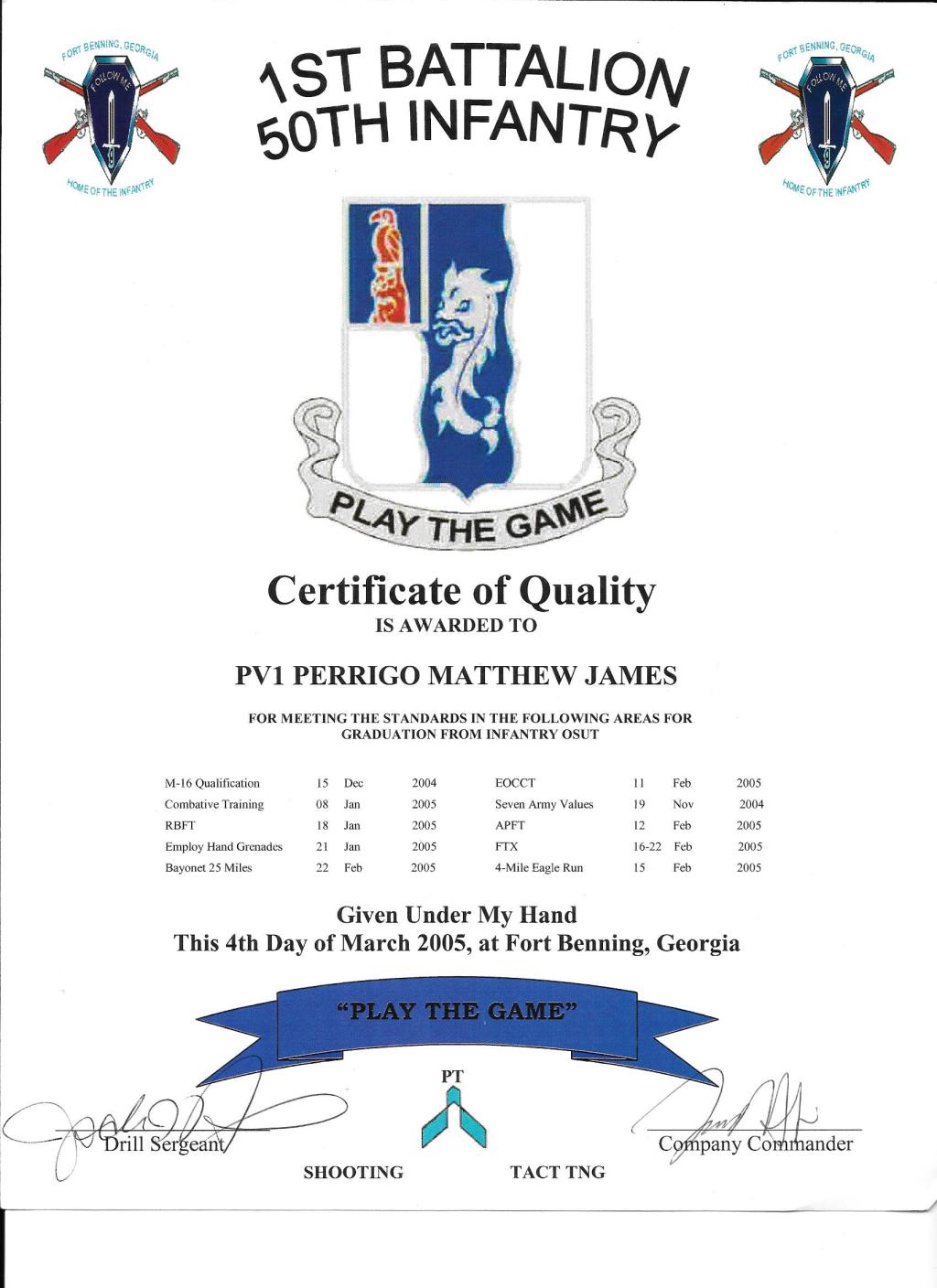
Next came graduation: uniforms pressed, blue cords earned. We had a week to clean our TA-50, prep our Class A’s, and practice ceremony steps. Family and friends were coming, and I was excited to see my girlfriend and my family. I wasn’t even sure who would show up, but I couldn’t wait.
Basic training never got “easy,” but pushing through it day by day made me tougher than I ever thought possible.
Mud, Pull-Ups, and Fruit Punch: Surviving Infantry Basic in 2004
By:
Posted in:
 travelingwarrior.blog